> For the complete documentation index, see [llms.txt](https://ei-docs.keywordrush.com/llms.txt). Markdown versions of documentation pages are available by appending `.md` to page URLs; this page is available as [Markdown](https://ei-docs.keywordrush.com/custom-cookies.md).
# Custom cookies
Custom cookies can be useful in the following situations:
* Extracting data when product pages or prices are only available after logging in to the supplier’s website
* Changing the default currency or shipping address
### How to set custom cookies
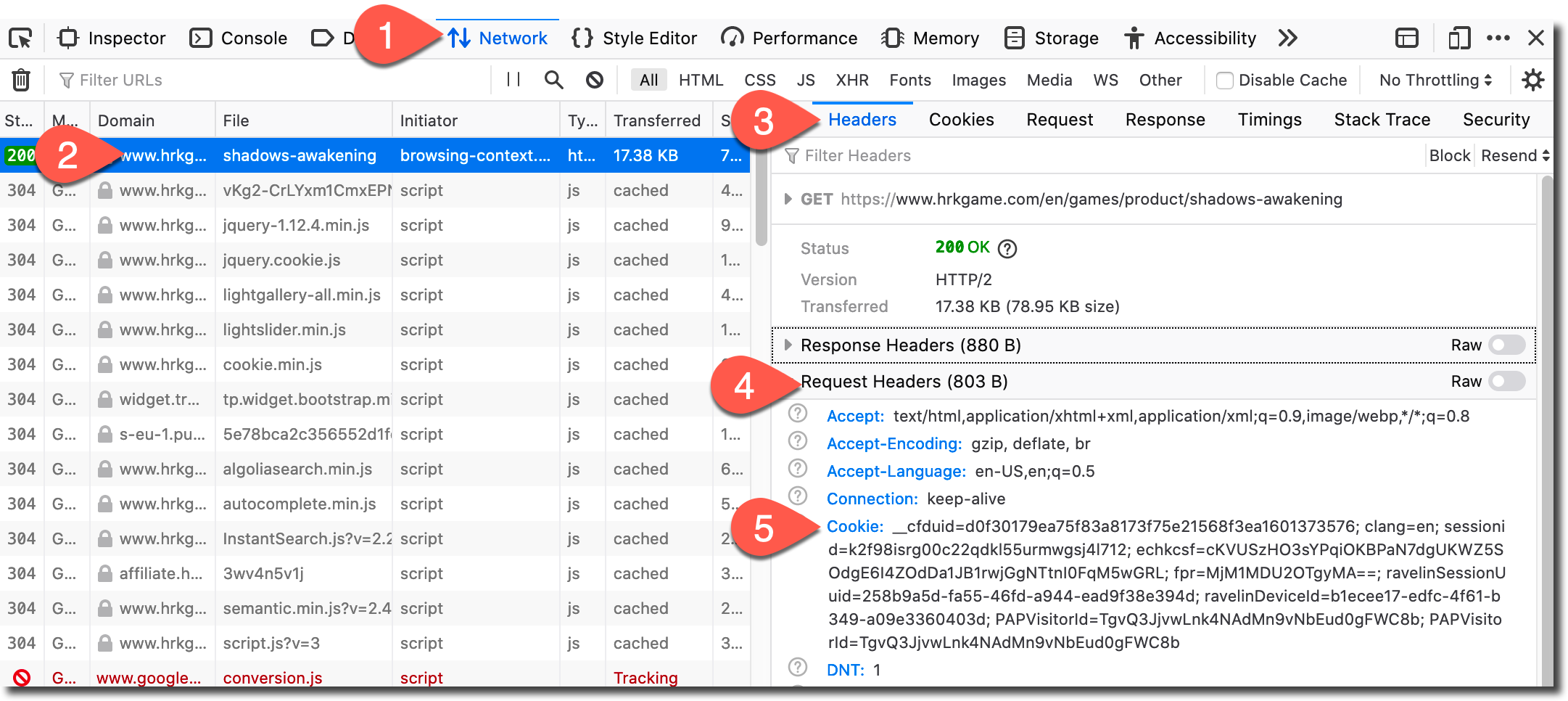
1. Open the product page on the source website and configure all necessary settings (e.g., log in, select currency, set shipping address).
2. Refresh the page to ensure settings are applied.
3. Open your browser’s developer tools (usually by pressing **F12**).
4. Go to the **Network** tab.
5. Find and select the product URL in the left-hand panel.
6. In the right-hand panel, select the **Headers** tab.
7. Scroll down to the **Request Headers** section and locate the **Cookie** field.
8. Copy the full cookie string.
9. In the **EI Settings**, navigate to **Extractor > Settings > Custom Cookies**, and paste the cookie string for the appropriate domain.
{% hint style="warning" %}
**Notes:**
* ⚠️ Not all websites support cookie-based data extraction.
* ⏳ Cookies may expire over time. If extraction stops working, repeat the steps above to refresh your cookie settings.
{% endhint %}